
Winner spotlight: Without
-
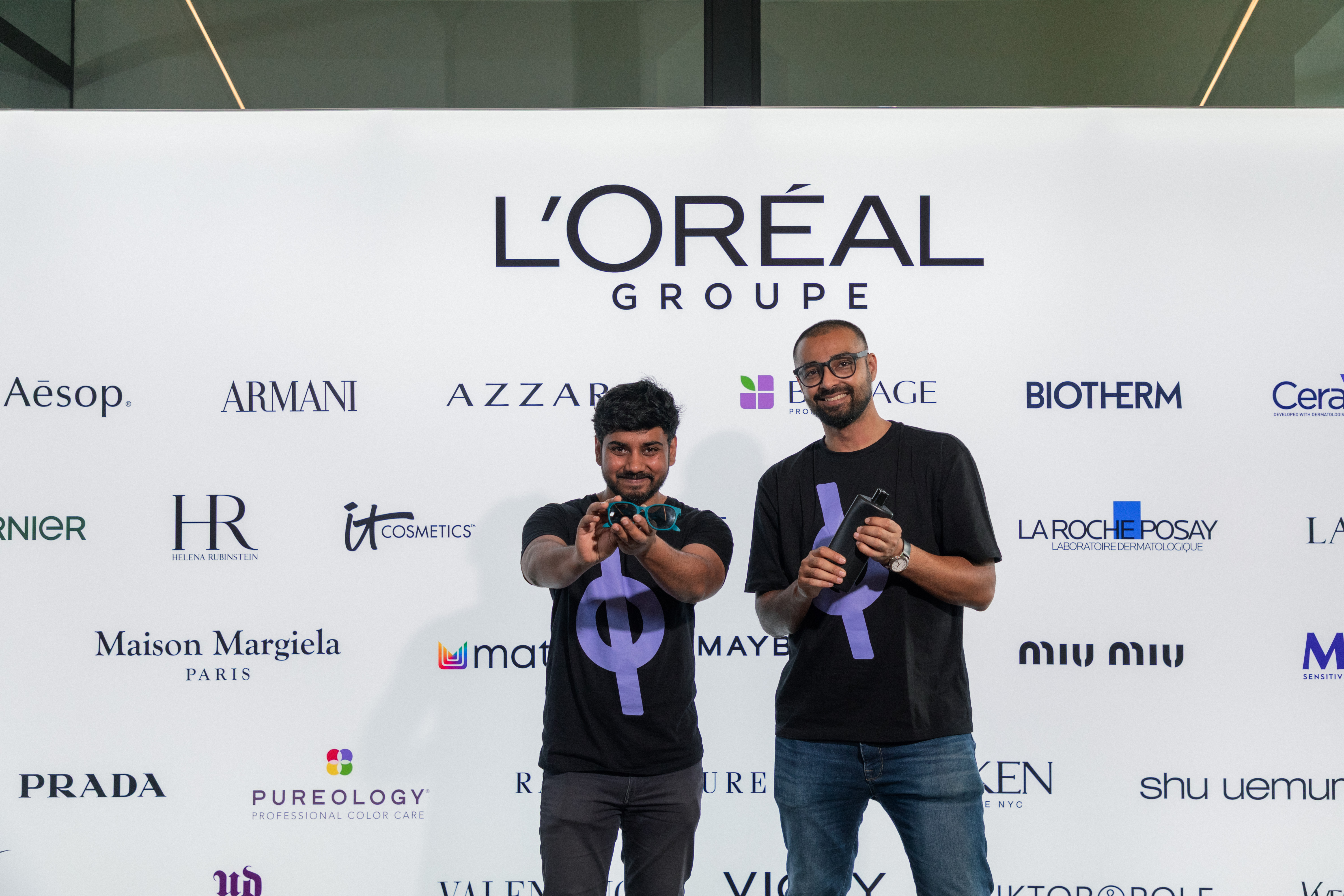
Without, a winner from the L'Oréal Big Bang Beauty Tech Innovation Program, was selected for its breakthrough approach, creating the world-first 100% recycled shampoo bottle made entirely from discarded sachets
-
Without uses deep-tech material science to transform “unrecyclable” plastic sachets into high-quality, circular packaging
-
Without is now working with L’Oréal on a pilot to test and scale 100% recycled packaging solutions in line with the Group’s L’Oréal for the Future program and 2030 sustainability goals
Every year, an estimated 855 billion plastic sachets are produced globally. Yet less than 1% are recycled, largely because multilayer plastics are considered “impossible” to process. For material science startup Without, this challenge represents both an environmental urgency and a massive opportunity to fundamentally increase the value of waste and close the loop in high-volume consumer packaging.
For the beauty industry, which is accelerating its shift toward greener products and sustainable packaging, the question is no longer whether change is needed but how fast it can scale.
This is where Without, a 2025 Big Bang Beauty Tech Innovation Program winner, and L’Oréal’s sustainability ambitions meet, with the opportunity to turn today’s waste into tomorrow’s resources.
Turning waste into high-quality materials
Without has developed a proprietary chemo-mechanical process that transforms unrecyclable, multilayer plastic, such as shampoo sachets, into high-quality material that can be reused for packaging. In a world-first demonstration, the team created a 100% recycled shampoo bottle made entirely from discarded sachets, proving that circular design can meet both performance and aesthetic standards.
The same deep-tech platform has already powered products like sunglasses made from discarded chip packets, showing the scalability of the approach across beauty, fashion and lifestyle categories.
“We have been working on this for the past five years”, says Anish Malpani, Founder of Without. “Winning the Big Bang Beauty Tech Innovation Program gives us a lot of validation, and this is how we think we can help make supply chains more ethical and sustainable.”
Why Big Bang mattered: from pitch to L’Oréal pilot
At L’Oréal’s SAPMENA Big Bang Beauty Tech Innovation Program, Without presented its technology and vision for ethically recycled packaging and inclusive sourcing. What made the win especially meaningful was not just the recognition, but the opportunity to pilot its technology with one of the world’s largest beauty tech companies.
“This competition was not just about getting an award and recognition”, said Malpani. “We actually get the opportunity to do a pilot program that can be scaled across markets. That means L’Oréal is going to put their money where their mouth is.”
For a startup trying to scale, working with L’Oréal brings credibility, resources, and access to expertise. “It gives us a lot of validation in what we do and how we operate”, added Amish Nayan, Chief of Staff, Without.
Why it matters for L’Oréal and the beauty industry
The collaboration aligns closely with the L’Oréal for the Future roadmap, which is anchored on stewarding the climate transition, safeguarding nature, driving circularity and supporting communities. With targets to significantly reduce virgin plastic and shift to recycled, responsibly sourced materials by 2030, partnering with startups like Without enables L’Oréal to test emerging and breakthrough technologies, while advancing inclusive, ethical supply chains.
It's also a signal to the broader beauty industry: circular packaging isn't just aspirational – it's becoming scalable. Through this open innovation collaboration, Without is transforming hard-to-recycle waste like shampoo sachets into high-quality packaging, proving that advanced technology and inclusive sourcing can drive real circularity in the industry.
About Without
Founded as a material science and impact-driven enterprise, Without reimagines what the industry calls “unrecyclable” waste and the livelihoods tied to it. By combining deep polymer technology with socially inclusive sourcing, the company transforms multilayer plastics and mixed textiles into high-quality materials while formalizing and upskilling waste-pickers and marginalized workers into dignified, better-paid employment.
Its mission is simple yet ambitious: to prove that circular, planet-positive products can scale without compromising on quality, price, or people.